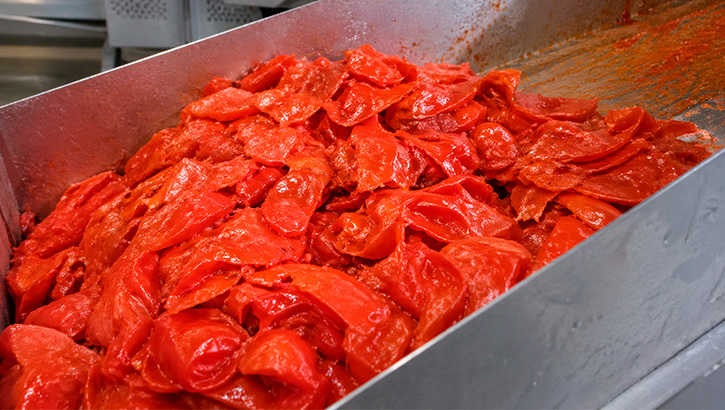
Waste management in the food industry has become a key factor in improving sustainability, production efficiency, and profitability. In sectors such as the processing of fruits, vegetables, legumes, jams, sauces, and creams, the volume of byproducts generated—such as peels, seeds, and pulp—is high, but it also represents a significant opportunity for valorization.
At Serrano FoodTech, specialists in machinery for the food industry, we are committed to technological solutions that allow for the reuse of food byproducts, reduce waste, and generate new products with added value.
Why is the management of food by-products important?
Proper management of byproducts in food processing not only helps reduce environmental impact but also optimizes the use of raw materials and ensures compliance with European sustainability regulations.
Organic waste generated during processing can be transformed into:
- Ingredients rich in fiber and antioxidants
- Vegetable oils and natural extracts
- Bases for sauces, creams, and jams
- Dehydrated products with commercial value
- Functional flours from seeds
This approach responds to the growing demand for a circular economy in the food industry.
Efficient waste and by-product management in the food industry is no longer optional, but a strategic necessity. Thanks to innovation in machinery and processes, it is possible to transform peels, seeds, and pulp into new resources, boosting sustainability and business competitiveness.
Technologies for reusing skins, seeds and pulps
Innovation in food processing machinery allows us to turn waste into resources. These are some of the key technologies:
Food separation and classification systems
Equipment designed to efficiently separate skins, seeds and pulps during processing, facilitating their subsequent reuse.
Crushing and refining of by-products
Technology that transforms plant waste into purees, pastes or homogeneous bases that can be reused in food production.
Extraction of valuable compounds
Systems that allow obtaining oils, fibers and bioactive compounds from seeds and hides, with applications in food and other sectors.
Dehydration of food waste
Processes that remove moisture to increase the shelf life of by-products and facilitate their marketing.
Industrial automation and process control
Digitalization improves efficiency in waste management and ensures traceability throughout the production chain.
Benefits of waste reuse in the food industry
mplementing by-product valorization solutions provides clear competitive advantages:
- Reduced waste management costs
- Greater utilization of raw materials
- Creation of new business lines
- Compliance with environmental regulations
- Improved sustainable corporate image